
- 1-833-645-2662
- info@fruiteriemilano.ca
- 6862 St-Laurent (Little Italy) Montreal, Quebec, H2S 3C7
- FR

The Latteria Sociale Mantova group is recognized as a leader in Italy for the production of Grana Padano and for the marketing of other Italian PDO cheeses. This is why we decided to import their products in order to offer our customers a high-quality, natural product with an incomparable taste.
Since 1929, the company has managed to renew itself and grow while maintaining its original status as a cooperative of associated farmers, which allows it to produce 700,000 litres of milk every day and an average of 1,200 wheels of Grana Padano cheese, thanks to its three modern dairies.
Located in the province of Mantua in Lombardy, the company not only ensures cheese production according to consortium rules, but also handles the aging in its own maturation cellars, the storage, and the marketing of its products directly on-site.
Grana Padano is one of the most well-known Italian cheeses in the world.
Furthermore, thanks to its production process and aging, it contains less than 0.1 g of lactose, which gives it a particular distinction and allows it to be classified among lactose-free cheeses.
Regulated by the consortium, milking takes place twice a day. To meet the requirements of the specifications, this milk must be used within the following 24 hours to make the cheese.
The cows’ diet is also regulated. They must be fed fresh fodder and feed originating from farms in the production areas, which gives the raw milk—and therefore the cheese—its distinctive flavour.
A long wheel-production process follows. To obtain the “Riserva” status, the cheese must be aged for 20 months and undergo additional quality controls that guarantee its quality and the legitimacy of the product. The wheel must be of first choice and present no defects—neither during visual inspection nor during tapping.
Its paste is hard, slightly grainy, and has a more amber color due to its aging process.
Even though it is 4 mm to 8 mm thick, its rind is hard and smooth but edible. It must be branded with three inscriptions: the words Grana Padano, a mark certifying the quality of the cheese and the legitimacy of the product; the word RISERVA, a mark guaranteeing that the cheese meets the highest production standards; and a clover-shaped mark with the letters DOP and a serial number, which certifies that it was produced according to the consortium’s standards.
Its taste is rich and full-bodied, yet at the same time delicate and aromatic. It gives off notes of dried fruit, hay, and even butter.
Often confused with Grana Padano, Parmigiano Reggiano is the cheese with the highest calcium content and the fewest additives.
The longer it is aged, the more flavorful it becomes, without becoming too sharp.
The production of this cheese begins by combining cow’s milk obtained from the evening milking, which is allowed to settle overnight at room temperature, and the cream that forms on top is removed the next morning, with the morning milking. The curd obtained from this mixture is what allows Parmesan to be made.
This cheese is produced according to the strict rules of the consortium, from the feed consumed by the cows—hay or dried grass—to the production methods, and through to its aging and branding.
The Parmigiano Reggiano PDO from Latteria Sociale Mantova stands out for its beautiful straw-yellow color, with a more pronounced intensity achieved through its 22-month aging process.
In fact, it is not uncommon to find small white spots throughout its paste. These are tyrosine crystals, an amino acid that adds flavor to the cheese, which form during the aging process. On the palate, these white spots with a salty taste crack under the teeth before melting. They are a sign of the product’s quality and the success of its longer aging period.
The intensity of the aromas and flavors of Parmigiano Reggiano increases with aging. Its granular, crumbly texture, with an elastic feel, reveals a rich and delicate taste of nuts and hints of dried fruit.
Its smooth straw-yellow rind should be 6 mm thick and stamped with dotted markings indicating the name of the cheese, along with other markings showing its production date and the letters DOP.


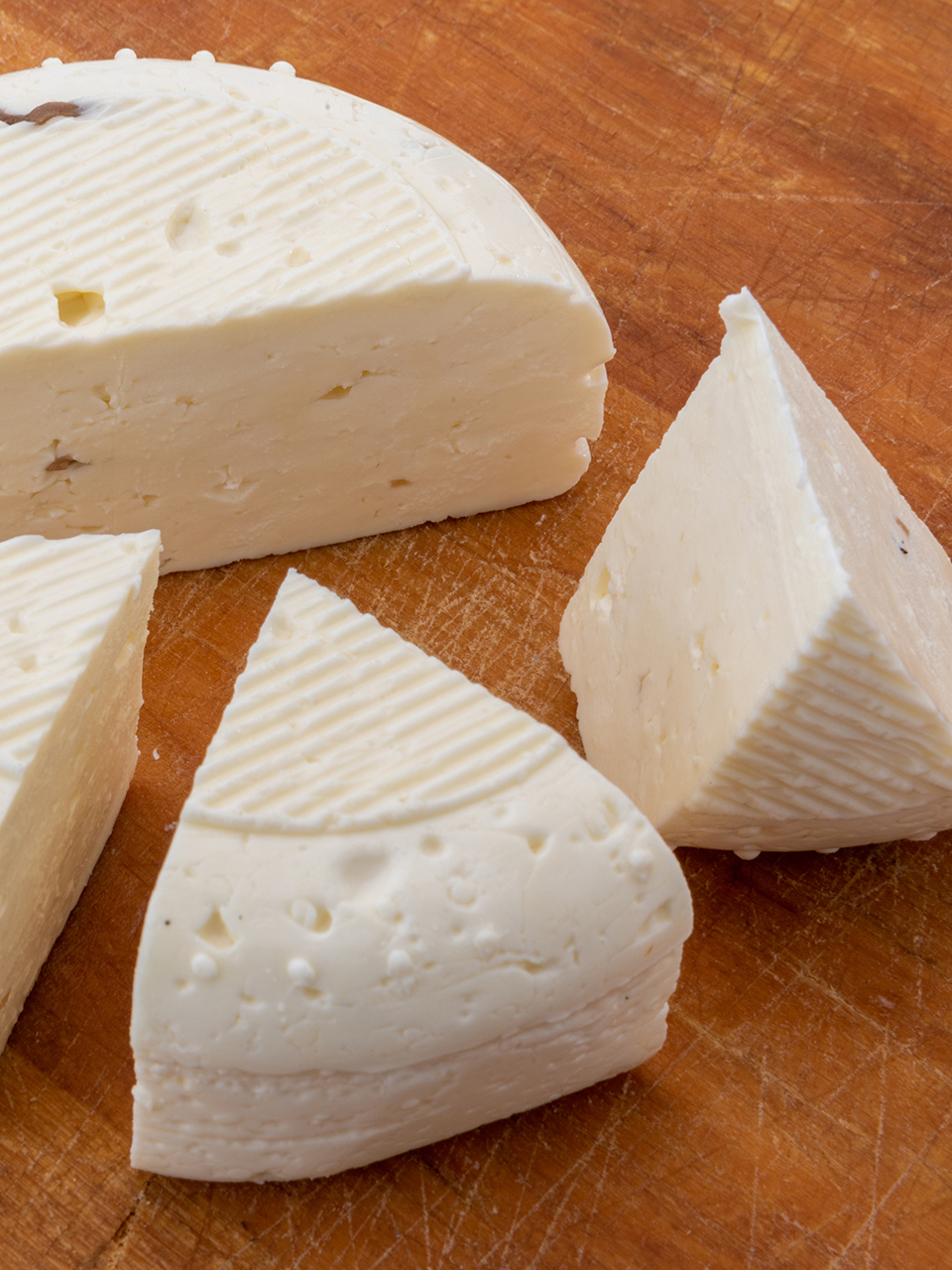


A leader in fresh cheese production, the Montello dairy is located in Giavera del Montello, in the heart of the Veneto region. The company is run by the third generation of the Lazzarin family, the grandchildren of Giovanni Lazzarin, nicknamed Nanni.
The family has been producing cheese according to ancestral tradition since 1947. Even though the facilities are state-of-the-art, the result is exceptional artisanal quality, ensuring products with a fresh and unique taste.
Nonno Nanni fresh cheeses are made with carefully selected milk from local farmers near their facilities, as well as natural, high-quality ingredients. Subjected to repeated quality controls at every stage of production, more than 60,000 checks are carried out each year.
Since 1960, the Carozzi family has produced fresh cheeses from cow’s and goat’s milk in the heart of Valsassina, an alpine valley in Lombardy known for its gastronomy and dairy heritage.
Master cheesemaker Marco Carozzi ensures that the products evolve with changing tastes while adhering to traditional production techniques. Today, the company offers a variety of fresh or aged cheeses, some even with Protected Designation of Origin (PDO) status.
The Ponte Reale farm was inaugurated on May 12, 1999. Thanks to the innovative concept of founders Enrico and Roberto Rega Spina, this family business is recognized as the only farm committed to producing organic PDO buffalo mozzarella.
From raising the buffalo to producing the cheese, everything is done on the company’s land, located in the province of Caserta in Campania. The land is cultivated according to certified organic methods to ensure an authentic and high-quality taste. The feed used to nourish the livestock comes from 100% organic agriculture.
From the cultivation of land used to feed animals to the distribution of ready-to-eat products, Fattorie Garofalo is among the largest buffalo breeders and producers of buffalo milk. Based in Campania, it leads a group of companies composed of seven farms and three production units, which sets it apart and allows it to guarantee full traceability of all its products. Additionally, it operates its own distribution network.
Each year, more than 38 million liters of milk are transformed into over 10 million kilograms of products, which are distributed in more than 40 countries.
Renowned for its mozzarella di bufala and Mozzarella di Bufala Campana PDO, as well as other buffalo-milk specialties, their products are identified by a color-coding system:
Il Forteto is an agricultural cooperative founded in 1977. Today, it comprises over 72 members and represents one of the most important cheesemakers within the Pecorino Toscano Consortium.
Produced according to the consortium’s specifications, this pecorino is a 100% Italian pasteurized sheep’s milk cheese. It is aged for 20 to 30 days and is characterized by a semi-firm, straw-yellow paste with a light flavor featuring notes of milk and butter. Its rind is thin but not edible.
Located in southern Sardinia, Central specializes in goat and sheep cheeses. The environment of this Italian island allows herds to move from the coast to the high mountains to graze on uncontaminated pastures, resulting in exceptionally healthy and flavorful milk.
This PDO sheep’s milk cheese stands out for its pale-yellow-tinged white paste, dotted with small holes, and for its flavor, which becomes more intense and sharp with aging. Aged for a minimum of 20 days, it belongs to the family of hard cheeses.